Blog

SEO, AEO, & GEO: What’s the Difference (and Why You Need All Three)

SEO, AEO, and GEO each optimize for a different stage of the buyer's search journey — SEO gets you found in search results, AEO gets you the direct answer, and GEO gets your brand recommended by AI tools like ChatGPT and Claude. Rather than competing, the three work together to make your brand visible, trusted, and cited everywhere buyers are searching.
Category Blog
Date 08.21.2026
Author Aleisa
Services Search Engine Optimization (SEO), Generative Engine Optimization (GEO)

How people find information has changed. Search engines, AI Overviews and AI chatbots like Claude and ChatGPT are just a few ways people are finding the information they are looking for, so it only makes sense that there are different approaches on how to optimize for these different outlets, right?

There is a common misconception that SEO, AEO and GEO are all approached the same way, and while they do have some overlap, optimization approaches differ based on where people find information.

SEO, AEO, GEO At a Glance

SEO

AEO

GEO

Stands for Search engine optimization Answer engine optimization Generative engine optimization
Primary goal Rank higher in search engine results Become the direct answer to a user’s question Become a trusted source cited or synthesized by AI assistants
Optimized for Traditional search engines Featured snippets, voice search, AI Overviews, answer boxes AI tools like ChatGPT, Gemini, Claude and Perplexity
Success metric Rankings, traffic, clicks Answer ownership, visibility in AI overviews Mentions, citations, recommendations, AI visibility
Content focus Comprehensive keyword-target pages Clear, concise answers to specific questions Authoritative content plus third-party validation and real-world discussion

What is SEO (Search Engine Optimization)?

Simply put, Search Engine Optimization (SEO) is what you do to make your brand (more) visible to people searching for what your product or service solves for, using search engines, by ensuring that your website and content ranks in the classic list of links of search results for your desired keywords and topics.

This is done by improving your website’s design, content and structure; including but not limited to:

  • Updating your website to ensure the proper HTML elements are on each page (H1, H2,  meta descriptions, etc.)
  • Optimizing pages, blogs, etc. with keywords or phrases that align with your product or service
  • Ensuring there are no broken links on your site and/or no pages are giving 404 or 301 errors

What is the SEO Process?

This is achieved by following the typical SEO tactics, such as:

  • Keyword research: Seeing what your site currently ranks for, what your competitors are ranking for, calling out any gaps and/or areas that can be improved upon, etc.
  • Technical Audits: Ensuring that your website’s backend and structure is sound
    • Ensuring the proper HTML elements are on each page (H1, H2,  meta descriptions, etc.)
    • Checking for broken links
    • Looking at your site’s crawlability
    • Reviewing schema markup
    • Internal linking
    • Making sure the right pages are being indexed or excluded
    • Site speed
  • Optimizations & Content Creation
    • Optimizing current content to include target keywords/phrases
    • Creating net new content to fill gaps and/or help increase visibility

Example of Successful SEO

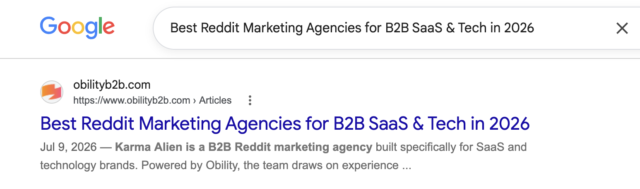
Let’s say your company (or your sister company) is a Reddit Marketing Agency and you write and publish an article about “Best Reddit Marketing Agencies for B2B SaaS & Tech in 2026.” You’d want your website/article to display on the first page of search results. The higher up on the page, the better.

What is AEO (Answer Engine Optimization)?

The primary objective of Answer Engine Optimization (AEO) is structuring the content on your website in a way so that information can be extracted from it as the answer, with the ultimate goal of appearing in answer boxes, AI Overviews, Featured Snippets, ChatGPT, voice assistants, etc.

AEO is becoming increasingly important because the way people search and find information is changing. Instead of having to type in keywords and sifting through endless results for the answer to their question, users are able to type in a question and get a direct answer at the top of the page. The brands that provide the answers buyers see, are the brands that buyers tend to trust more, reach out to and do business with.

What is the AEO Process?

This is achieved by following the typical AEO tactics, such as:

  • FAQ Sections: Including FAQs on your website, should be a top priority for AEO. The intention is that you are providing the questions, and answers, to what your audience is asking.
  • Schema Markup: Humans interpret information differently than search engines and AI systems do. Ensuring that your website has schema markup, helps ensure that search engines and AI systems understand what information is on that page.
  • Technical Audits: Sound familiar? Technical audits aren’t just important for SEO, they’re important for AEO too. And the same process should be followed for both.

Example of Successful AEO

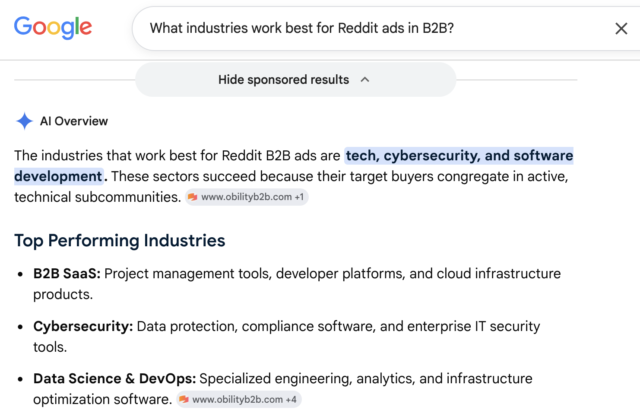
An example of a successful AEO strategy would be if your content is referenced in an AI Overview when a user asks a question. For example, if a user searches for “what industries work best for Reddit ads in B2B?” Having your website be referenced as where the answer originated, would be an indicator of successful AEO.

What is GEO (Generative Engine Optimization)?

The short answer, Generative Engine Optimization (GEO) is the process of influencing what LLMs (such as ChatGPT, Claude, Perplexity, etc.) recommend, summarize or cite. The key difference though is that it’s not just pulling from your website, it pulls from publications, reviews, forums, brand mentions, and more.

What is the GEO Process?

This is achieved by following the typical GEO tactics, such as:

  • Build Brand Authority: Ensuring your brand is recognized as a credible, trustworthy and influential source within your category.
  • Brand Mentions: Specifically in trusted publications. This also helps build brand authority, because it further signals that your brand is credible and well-known within your category.
  • Participate in Relevant Online Communities: Be authentic and build trust where your buyers are already having conversations; for example, Reddit. Community conversations provide independent validation.
  • Creating AI Ready Content: Don’t think of if as “writing for AI” but more focused on making your expertise easy to interpret, connect and cite.

Example of Successful GEO

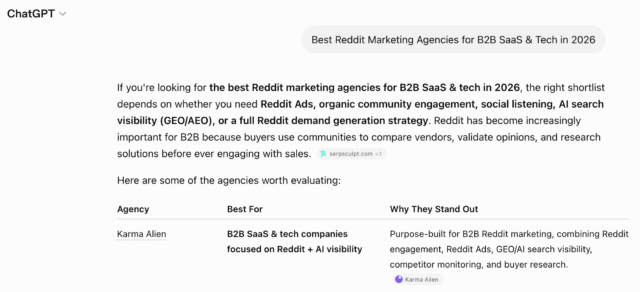
An example of a successful GEO strategy would be if an LLM, such as ChatGPT, recommends your company when a user asks a question. For example, if a user searches for “Best Reddit Marketing Agencies for B2B SaaS & Tech in 2026.” Your company being included in that list indicates successful GEO strategies.

Key Takeaway

Rather than replacing one another, SEO, AEO, GEO are complementary to each other. Each one plays a different role in how buyers find and trust your brand.

  • SEO → rank the pages you own
  • AEO → makes your content the answer
  • GEO → earn the citations that get your brand recommended by AI

What this looks like in action:

  1. Create authoritative, optimized content
  2. Ensure structure is optimized for search engines to extract answers
  3. Build credibility for your brand outside of your website

As AI-powered search continues to grow, the strongest strategy isn’t choosing one of these approaches over the others. It’s integrating all three of them into a single, cohesive strategy to organic search.

In Conclusion

At the end of the day, SEO, AEO and GEO aren’t competing strategies fighting for the same budget or impression share. Together, they build inevitability. You’re found, quoted and cited everywhere buyers are looking.

About Obility

We have one purpose: help B2B companies generate demand and increase revenue through online marketing. Located in Portland, Oregon and founded in early 2011, we’re a fast-growing agency with a global client base ranging from early stage start-ups to multinational enterprises. Our focus is on B2B companies and we’re proud that our growth has been due primarily to client referrals.

Services