Blog

ChatGPT Ads Best Practices for B2B Marketers

Learn B2B benchmarks, budgeting strategies, targeting tips, and ad creative best practices for ChatGPT Ads.
Category Blog
Date 10.02.2026
Author MacKenzie Preziosi
Services Paid Search

ChatGPT Ads Best Practices for B2B Marketers

AI ad spend in the US is projected to reach $32.03 billion in 2026, with over 80% of that spending flowing through traditional paid search listings, appearing alongside AI-generated results, rather than directly into chatbot conversations.

Obility began testing ChatGPT Ads for B2B clients when self-serve access opened, using real budget from day one.

Obility is an agency built exclusively around B2B paid media for over 15 years, with Google Premier Partner status confirmed for 2026 (limited to the top 3% of agencies nationally). Client work spans Cloudflare, Autodesk, Snowflake, Fastly, and Hitachi Vantara. One paid social program for Snowflake lifted MQL volume 105% and cut cost per MQL by 31%.

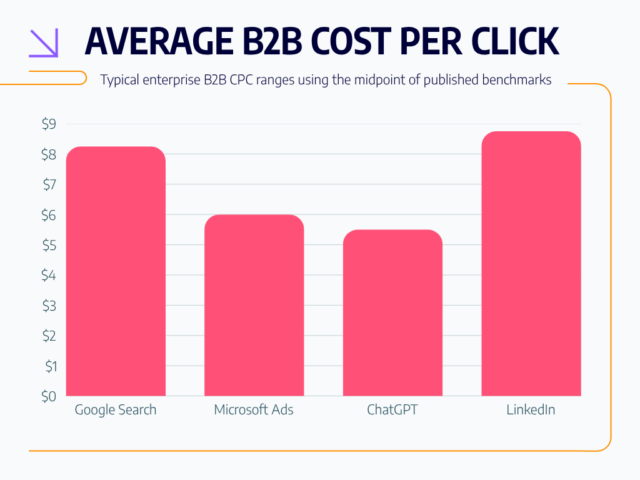
ChatGPT cost per click (CPC) runs between $3 and $8, sitting below both Google Search and LinkedIn, but above Microsoft Ads. Volume matters more than cost.

OpenAI’s published advertisers remain primarily retail names like Newegg, Best Buy, Lowe’s, and VistaPrint, which means B2B marketers cannot rely on official case studies for strategy. B2B benchmarks require dedicated B2B account testing as findings continue to emerge in the B2B space, benchmarks and goals may change to reflect this emerging channel. As findings continue to emerge in the B2B space, benchmarks and goals may change to reflect this emerging channel.

What Are ChatGPT Ads and How Do They Work?

ChatGPT Ads appear below chat responses for people on the Free tier and the $8 per month Go tier, including logged-out sessions. Setting up a ChatGPT ad reaches this broad audience, though anyone on Plus, Pro, Team, Business, Enterprise, or Edu plans falls outside that reach, as does anyone OpenAI identifies as under 18. OpenAI labels every ad and keeps it below ChatGPT’s own answer, separate from the response itself. The ad never sits inside the answer.
ChatGPT Ads Benchmarks for B2B Campaigns

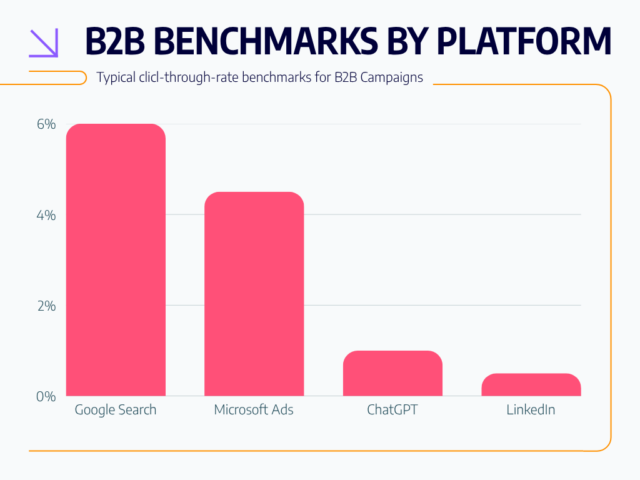
Obility’s campaigns show these B2B benchmarks on ChatGPT Ads:

  • 0.5%–1.0% CTR
  • $3–$8 CPC
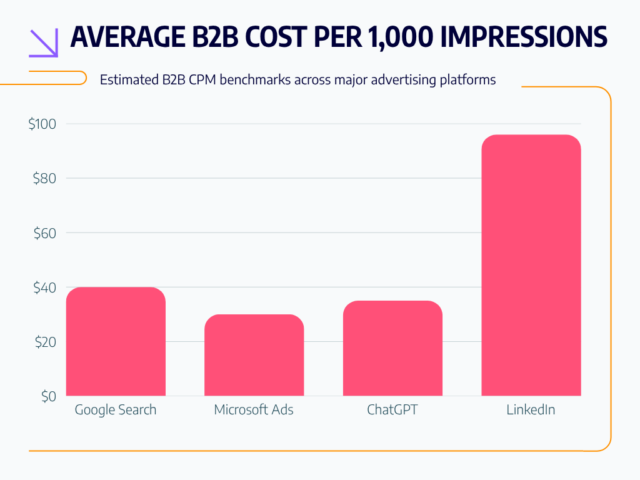
  • $25–$45 CPM
  • $120–$250 cost per MQL

Running ChatGPT ads effectively requires analyzing these real spend metrics.

Click-through rate (CTR) sits below Google Search and Microsoft Ads, and above LinkedIn. Cost per click runs between $3 and $8, sitting below both Google Search and LinkedIn, but above Microsoft Ads.Microsoft Ads holds the lowest cost per 1,000 impressions (CPM) of the group, with ChatGPT Ads running below Google Search and LinkedIn on that same metric.

Independent data aligns with these findings. Search Engine Land campaign spend placed average CPC between $2 and $5 in an August 2026 review. OpenAI guidelines suggest starting max bids of $3 to $5 for Clicks campaigns. Early numbers fluctuate quickly and depend heavily on account age and vertical.

Volume for B2B SaaS accounts stays smaller than these numbers suggest. A large share of that audience pays for ChatGPT, and that plan tier falls outside ad eligibility.

How to Set Up and Manage a ChatGPT Ads Account

Account setup requires a legal business name, tax ID, payment method, and favicon. Creation happens directly through OpenAI’s ad platform.

OpenAI’s policy keeps the account in the client’s name. The agency joins that account as a user. Obility manages every client account this way. Google Ads and Meta Ads both offer a Manager Accounts structure for agencies running several accounts at once, whereas OpenAI advertising keeps every account separate and client-owned.

Setting a Realistic ChatGPT Ads Budget

ChatGPT Ads run on a daily budget, the average amount a campaign spends per day over a seven-day window. A campaign can spend twice that daily budget on any single day. Then the week balances out.

The platform’s minimum daily budget is $25, which aligns well with where Obility starts B2B accounts, $25-$30/day on manual cost-per-click bidding. Bids below $3 trigger a warning that the ad may not deliver, a fixed floor rather than a read on competition. Volume builds slowly here.

A 90-day window provides sufficient volume to evaluate results. OpenAI’s sign-up offer provides $500 in ad credit after spending $500, essentially halving the initial test cost.

Obility ran a similar test on Reddit Ads to gather spend data before scaling past a pilot. The same disciplined approach applies here: maintain a small budget over a fixed window and evaluate performance against hard metrics.

Choosing Campaign Types and Bidding Strategies

ChatGPT Ads uses three campaign objectives: Views (billed as CPM for reach), Clicks (billed as CPC for traffic), and Conversions (billed per valid click while optimizing delivery toward a conversion event, or oCPC). Maximize Results automatically sets and adjusts bids across these objectives.

Selection runs through a relevance-weighted, second-price auction, a mechanic close to how Google’s Ad Rank works. Landing page quality and ad relevance factor into the price the same way a Quality Score does on Google Search. A stronger ad can win at a lower cost than a weaker one bidding higher.

When Obility is setting up a new ChatGPT Ads account, we structure it by topic, grouping campaigns around competitor comparisons, use cases, and core product categories. Broader groupings gather enough signal for the context-hint model to work well. Each campaign holds one buyer intent. That focus helps narrow the targeting context and ensures ad relevancy.

Using Context Hints and Targeting Options

Targeting runs on context hints: short phrases entered at the ad group level that describe a conversation topic. A hint describes a topic in plain language, close to how a buyer might describe a problem out loud. The platform reads the full conversation, then places an ad that matches that context beneath the response. Geographic targeting stops at the country and regional level. City-level targeting isn’t available yet.

A published test comparing plain keyword lists to full conversational questions showed keyword-style hints achieved more impressions, higher CTRs, and lower average CPCs. New accounts should validate this with their own data before committing full budgets.

That kind of context matching mirrors generative engine optimization, which also depends on matching a full topic inside AI-generated answers. Both reward topic depth over exact wording.

Building Custom Audiences for B2B

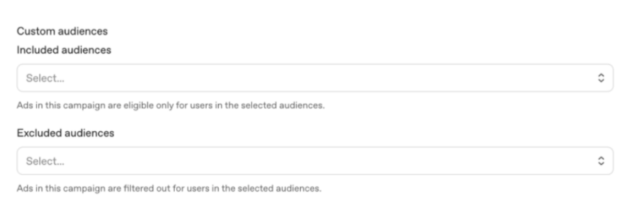
Custom audience uploads need a minimum of 25,000 matched users before a campaign activates, with OpenAI recommending building to 100,000. One file, one identifier type: emails, phone numbers, or hashed versions of either, kept separate from each other.

The 25,000-user threshold excludes narrow account-based lists from custom audience targeting, affecting enterprise accounts with smaller deal lists. If you are under the threshold, combining CRM contacts, current customers, closed-lost deals, and webinar or event registrants into one segment will help reach the required volume faster.

Ad Creative Best Practices

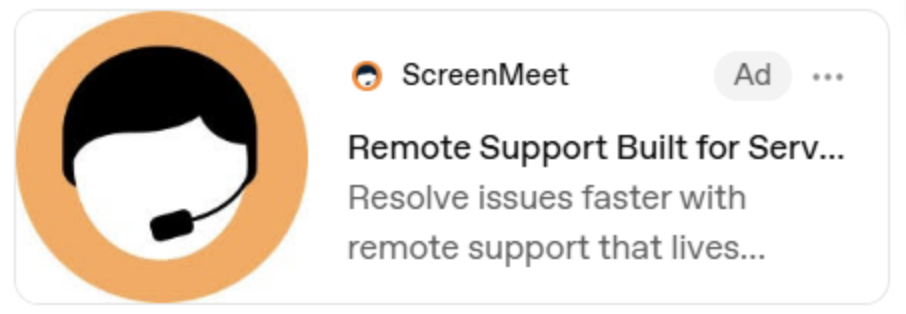
Every ad unit needs these parts:

  1. Advertiser name
  2. Favicon
  3. Headline – 50 characters before truncation
  4. Description – 100 characters before truncation
  5. Landing page
  6. One image – minimum 256 x 256

The headline caps at 50 characters and the description at 100, both subject to truncation past that point. The image needs a minimum size of 256 X 256 pixels, submitted as a square PNG or JPG.

Single-image ads featuring product photos regularly outperform company logos. Replacing logos with product or team photos directly improves CTRs.

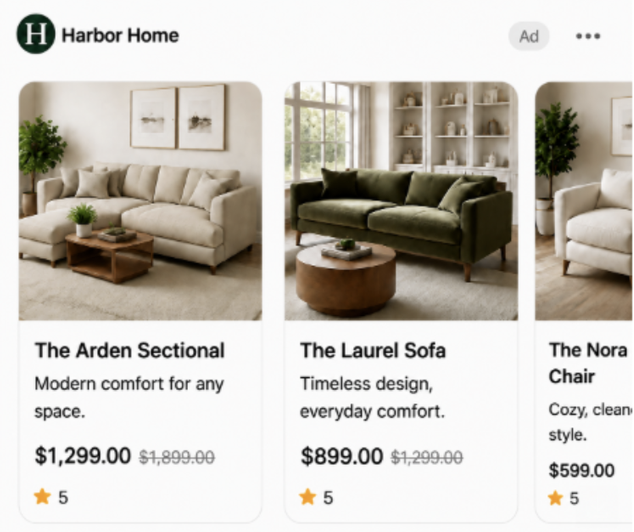
Carousel ads suit B2C product grids and price comparisons, but are worth testing for B2B accounts once budget allows for multiple creative variations.

Tracking Conversions and Performance Metrics

ChatGPT’s Ads Manager, part of OpenAI’s advertising platform, reports view-through conversions at the campaign, ad group, and ad level, counted within one day of an ad impression. A qualifying click that already claims a conversion keeps that same conversion from counting twice as a view-through. One conversion, one credit.

An impressions, clicks, and CTR report is available within minutes of launch, whereas spend reporting updates slower. Zero initial spend reporting typically reflects a processing delay rather than delivery issues.

Static tracking parameters added to a landing page URL carry through on ad clicks. The setup stays the same. Those parameters work inside a team’s existing analytics setup, so ChatGPT Ads traffic shows up the same way any other paid channel does.

Obility applies this same UTM-based approach when tracking traffic from AI Overviews and other AI search surfaces. The method carries over cleanly, covered in more depth in AI Overviews, Answer Search Referrals, and User Experience.

High-Impact Tests to Run First

Initial 90-day testing should include testing ad copy tone (e.g., Claude-written vs. ChatGPT-written copy) and testing carousel ads against single-image formats to establish performance baselines.

Obility applied this structured testing framework to Reddit Ads before recommending channel expansion. Small controlled tests minimize risk before committing larger budgets.

Why Work With Obility for ChatGPT Advertising

Obility runs Google Ads, Microsoft Ads, LinkedIn Ads, Reddit Ads, and now ChatGPT Ads for B2B and SaaS clients, all reported against pipeline and revenue. Every dollar needs a story. That reporting model is why teams shortlist Obility among the agencies built for B2B performance marketing, covering ChatGPT Ads and the rest of the paid stack alike. Account setup, budget pacing, and creative testing all run through Obility’s team from day one, inside the client’s own ChatGPT Ads account.

Talk to Obility about a ChatGPT Ads test

About Obility

We have one purpose: help B2B companies generate demand and increase revenue through online marketing. Located in Portland, Oregon and founded in early 2011, we’re a fast-growing agency with a global client base ranging from early stage start-ups to multinational enterprises. Our focus is on B2B companies and we’re proud that our growth has been due primarily to client referrals.

Services