AI search visibility changes from week to week because AI engines like ChatGPT, Gemini and Google AI Overviews generate every answer from probabilities. The most reliable way to measure generative engine optimization (GEO) performance is a blended scorecard of visibility, answer accuracy, AI referral traffic and conversions, read as a trend over months.
A new AI visibility tool seems to launch every few weeks, each with a demo, a free trial and a dashboard full of scores. I have tested many of them. And let’s be honest, I love a good Facebook ad that targets my pain points and my fear of falling behind. Our clients are doing the same. They come to us with reports from AirOps, Profound, Peec AI and Semrush, and each report tells a slightly different story about how the brand shows up in ChatGPT, Gemini and Google AI Overviews.
The result is more data and less clarity. When two tools disagree, or a score drops sharply in a week with no change to the site, teams start to doubt the whole channel. Below, we cover why AI visibility numbers move, why the tools rarely agree, and the measurement approach we use with clients.
Why Does AI Search Visibility Change So Often?
AI platforms generate every answer from probabilities, so the same prompt can return a different set of brands each time it runs. In traditional search, a page holds its position for days or weeks. In AI search, each answer is assembled fresh.
The clearest evidence comes from SparkToro’s January 2026 study. Rand Fishkin and Gumshoe.ai’s Patrick O’Donnell had about 600 volunteers run 12 prompts through ChatGPT, Claude and Google’s AI tools 2,961 times. ChatGPT and Google’s AI had less than a 1 in 100 chance of returning the same brand list twice. The same brands in the same order appeared less than once in 1,000 runs. Fishkin put it simply: “These tools are probability engines.”
Four forces keep AI visibility moving:
- Built-in randomness. Models sample from a range of likely answers, so the brands, sources and order change from one run to the next.
- Separate engines. ChatGPT, Gemini, Perplexity and Claude each run on their own model, training data and web index. Strong visibility in one engine tells you little about the others.
- Third-party sources. AI answers lean heavily on Reddit threads, YouTube videos, review sites and industry publications. When those sources change, your visibility changes with them.
- Model updates. New model versions and training data refreshes change how an engine describes and recommends a brand from month to month.
The volatility is large enough that Seer Interactive launched SeerSonar in October 2026 to track it. SeerSonar runs 625 buyer-style prompts in ChatGPT about every three days and scores how much the answers shift between runs. Seer built it because search marketers had MozCast to explain Google ranking swings, and AI search had no equivalent.
Why Do AI Visibility Tools Report Different Numbers?
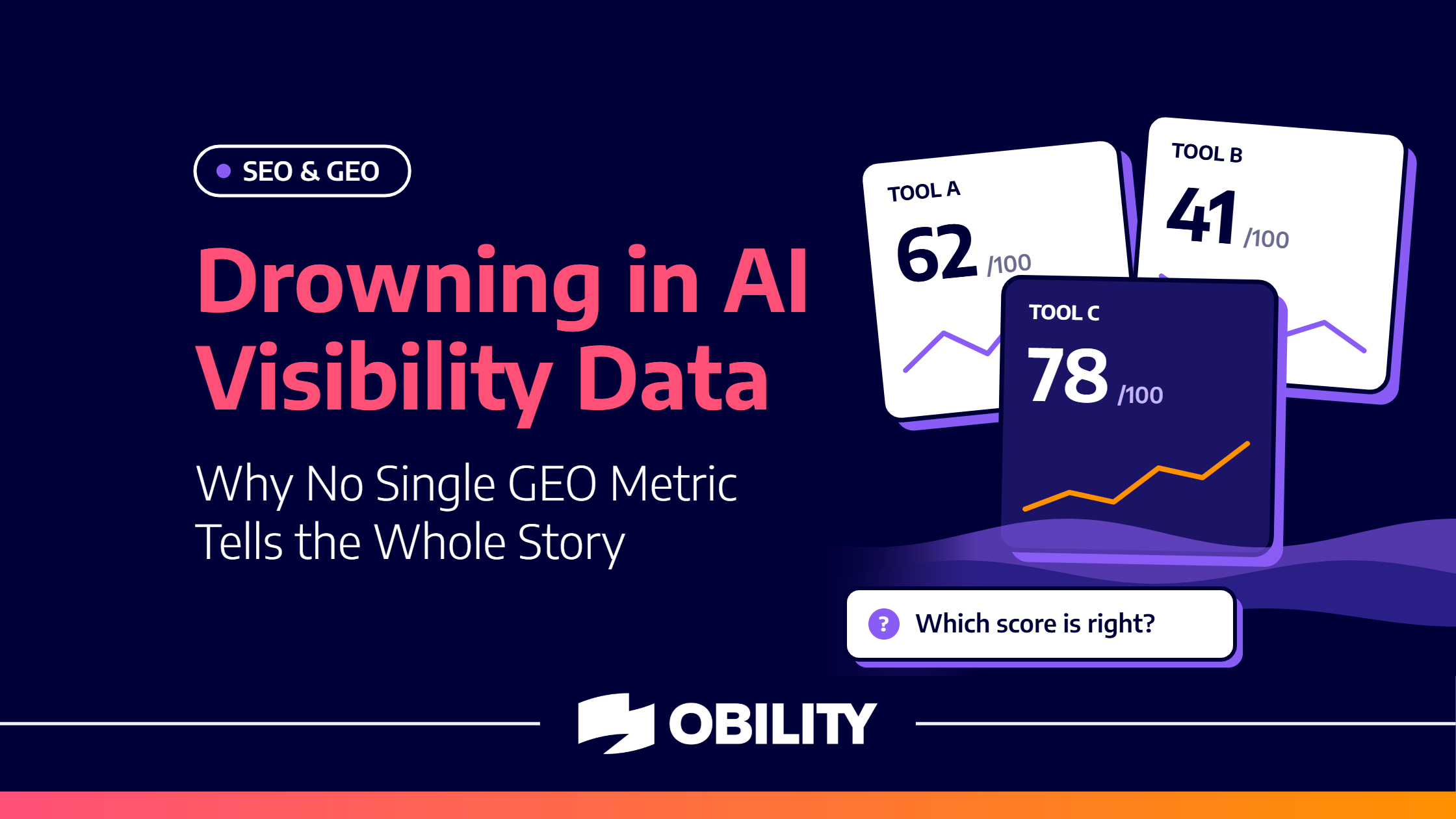
Every AI visibility tool samples a small set of prompts, so two tools tracking the same brand can report different numbers and both be within the margin of error. Each tool picks its own prompts, its own engines, its own run frequency and its own scoring formula. Most of those choices are hidden behind a single visibility score.
The prompt set alone creates large gaps. In the SparkToro study, human-written prompts with the same intent had an average semantic similarity of just 0.081, which means real buyers almost never phrase a question the same way. A fixed list of 50 or 100 tracked prompts captures a thin slice of how your audience actually asks.
Sample size is the second problem. Research covered by Search Engine Journal in July 2026 found the typical margin of error for a top-10 cited site was about five positions, and one in five sites had a margin wider than 10. A stable ranking took between 33 and 94 answers with citations, depending on the engine and topic. A tool that runs each prompt once a week reports noise as if it were a trend.
Most visibility tools also score only the final answer. In The AI Search Footprint, our research on nearly 10,000 B2B software buying prompts and more than 12,000 searches run through Claude, Claude answered 22% of prompts from its training data without searching at all. Brands Claude searched for by name appeared in 86% to 100% of its final answers, compared with 7% to 52% for brands it never searched for. Whether an engine considers your brand during its research shapes your visibility long before a tool records a mention.
This is why a single score should never drive a budget decision. Fishkin’s advice is to ask every vendor for a public, statistically sound methodology before you buy, and to ignore any tool that reports a “ranking position” inside AI answers.
What Should You Measure to Track AI Search Performance?
The most reliable picture of AI search performance comes from tracking visibility, accuracy and business outcomes together, then reading the trend over months. Seer Interactive’s CEO Wil Reynolds made the same point to Search Engine Journal: AI visibility only matters when it is tied to an outcome. Seer frames the goal in three tiers in its August 2026 guidance: be seen, be believed and be chosen.
This is the scorecard we use with clients:
| Metric | What it tells you | Where it comes from |
|---|---|---|
| AI visibility (mention rate) | How often your brand appears in answers for your category, averaged over many prompts and runs | Semrush AI Visibility, AirOps, SEOmonitor, or a similar tracker |
| AI share of voice | How your visibility compares with your top competitors | The same tracker, using a fixed competitor set |
| Answer accuracy | Whether AI describes your products, pricing and positioning correctly | Manual audits scored against your brand messaging document |
| Prompt and keyword coverage | Which buyer questions and topics you show up for, and which you miss | Tracker prompt reports plus Google Search Console queries |
| AI referral traffic | Sessions arriving from ChatGPT, Perplexity, Gemini, Copilot and Claude | Google Analytics 4 referral sources |
| AI conversion rate | Whether AI visitors fill out forms, book demos or become pipeline | Google Analytics 4 and your customer relationship management (CRM) system |
| Branded search demand | Whether AI exposure is driving more people to search for you by name | Google Search Console and Google Trends |
| ChatGPT engagement | Mentions, website clicks and discovery topics inside ChatGPT | ChatGPT Business Hub insights |
No one row carries the story. If visibility dips for two weeks while AI referral traffic and conversions hold steady, the dip is likely noise. If visibility, referral traffic and branded search all fall together over a quarter, something real has changed.
We saw this with ServicePower, a field service management software company. After an AI visibility audit in ChatGPT, Perplexity and Google AI Overviews, plus content restructured for generative engines, ServicePower saw an 83% increase in traffic from AI search engines, a 72% increase in mentions in AI Overview platforms and a 125% increase in conversions from AI users, quarter over quarter. Tracking all three together showed the visibility gains were producing conversions.
The last row is new. OpenAI launched Businesses in ChatGPT in beta in November 2026, which lets companies claim a profile, correct their information and see aggregated engagement data. It works much like Google Business Profile, and it gives brands first-party data straight from an AI engine for the first time at this scale.
How Do You Choose and Use AI Visibility Tools Without Drowning in Data?
The tool matters less than how consistently you use it. These are the practices we follow with our own clients:
- Pick one primary tracker and keep it. Switching tools resets your baseline, because every tool samples differently. To keep it simple, we focus on two tools Semrush and SEOmonitor. If a client already uses AirOps, Profound, Peec AI, or another tool they were swindled into buying we usually keep that tool as a secondary visibility score so we stay aligned.
- Ask how the tool samples. Find out how many prompts it tracks, how often each prompt runs, which engines it covers and whether it reports a range or a single number.
- Build prompts from real buyer language. Pull questions from sales calls, customer interviews and Search Console queries so the tracked prompts reflect how your audience asks.
- Report rolling averages. Use four-week or monthly averages for visibility and share of voice, and drop position-in-answer metrics from client reporting.
- Measure changes more than once. Take several readings before and after a content launch or site change, since a single before-and-after comparison cannot separate a real effect from noise.
- Tie every report to traffic and pipeline. A visibility chart earns its place in a monthly report only when it sits next to AI referral sessions, conversions and branded search.
Frequently Asked Questions
Can Semrush AI Visibility be the main KPI for GEO?
Semrush AI Visibility works well as one core KPI for GEO. Pair it with AI referral traffic, prompt and keyword coverage, and conversion rate by AI platform so a noisy week in one score never drives a decision.
Does a brand’s position inside an AI answer matter?
Position inside an AI answer is too unstable to track. SparkToro found the same brands in the same order less than once in 1,000 runs, so mention rate over many prompts and runs is the more useful measure.
How often should AI visibility be reported?
Report AI visibility monthly, using four-week rolling averages. Draw conclusions about direction only after several readings over at least a quarter.
What is ChatGPT Business Hub?
ChatGPT Business Hub is part of Businesses in ChatGPT, a beta OpenAI launched in November 2026. It lets companies claim a profile in ChatGPT, update their information and see aggregated insights on how people engage with them.
Measure the Trend, Then Act
AI search will stay volatile, and new tracking tools will keep launching. The brands that make good decisions treat any one visibility score as a single reading, check it against traffic, conversions and branded demand, and act on the pattern that holds over months.
Obility’s generative engine optimization (GEO) services help B2B marketing teams build that measurement framework and the programs behind it. To see where your brand stands today, ask for an AI Search Footprint analysis. We will show you how Claude reads your brand, how often it mentions you compared with how often it recommends you, and which types of content it relies on. If your team is sorting through reports from several AI visibility tools, talk to our team about a scorecard built around pipeline.